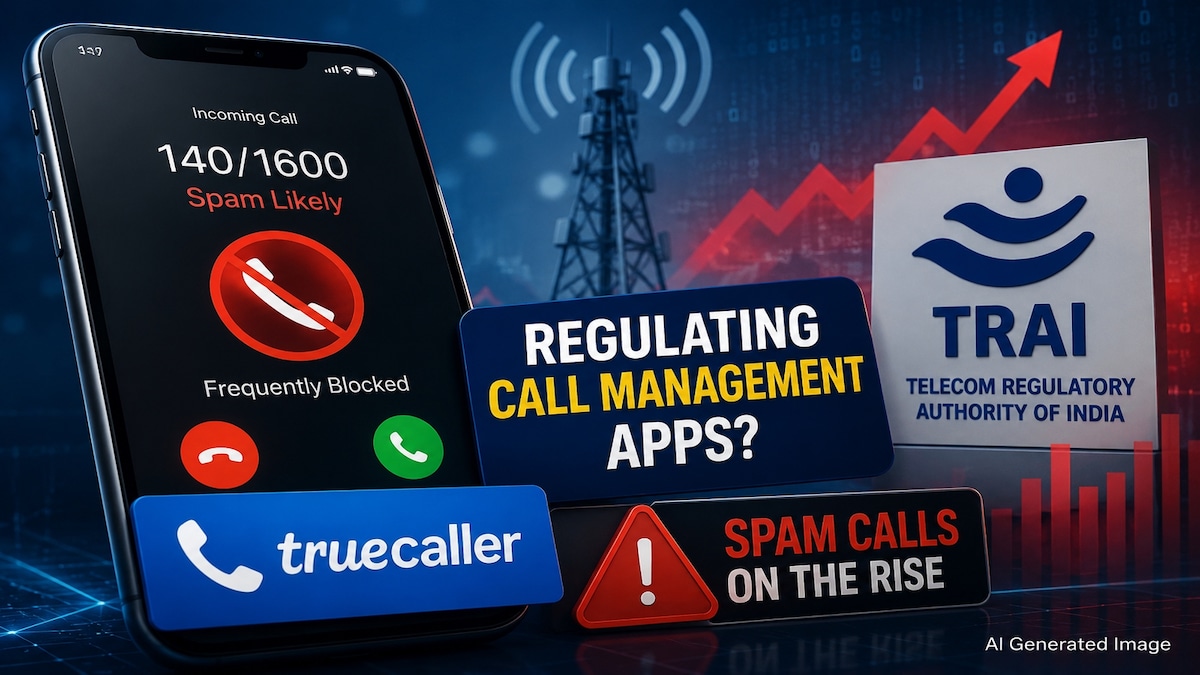
In a discussion with CNBC-TV18, Jhunjhunwala contended that TRAI’s move to prevent apps from marking calls from the 140 and 1600 series as spam has inadvertently led to increased misuse of those numbers, resulting in a surge of unwanted calls and diminishing consumer trust.
TRAI has approached the Ministry of Electronics and Information Technology (MeitY) to request authority under the Information Technology Act to oversee call management applications. The regulator claims that Truecaller is bypassing its guidelines by displaying a “Frequently Blocked” badge for calls originating from the reserved series for registered telemarketers and legitimate businesses.
Jhunjhunwala dismissed this criticism, asserting that Truecaller has adhered to TRAI’s instructions by eliminating spam labels for those number series.
“We no longer tag these calls. The red icon, Truecaller’s renowned spam indicator, isn’t shown. Calls from both 140 and 1600 will never be marked as spam on Truecaller,” he explained.
He noted that the “Frequently Blocked” badge was introduced only after users persistently reported receiving unwanted calls from these numbers.
“The evidence is clear. If 125,000 people block 1600 series calls daily, we had to take action,” Jhunjhunwala remarked. He emphasized that this badge simply informs users that a significant number of others have chosen to block a specific number and should not be confused with a spam designation.
Jhunjhunwala warned that exempting the 140 and 1600 series from spam detection would open a loophole for telemarketers and scammers.
“This would effectively give spammers a free pass,” he stated. “Spammers could utilize the 140 and, more crucially, the 1600 series to harass users as Truecaller would not mark them as spam.”
He argued that the rise in unwanted calls from these series has dissuaded consumers from answering even legitimate business calls, contradicting TRAI’s goal of establishing a trustworthy channel for commercial communication.
Jhunjhunwala questioned TRAI’s need for authority under the IT Act to regulate call management applications.
“I think TRAI seeks these powers to enforce IT regulations on call management apps more with an eye to the future than the present. This raises concerns because, if mandates like whitelisting 140 and 1600 numbers are initiated today, who knows what could come later?” he noted.
He emphasized that consumer feedback should be central in identifying spam callers.
“If a consumer identifies a number as spam, even Truecaller cannot override that. No one should be able to silence a consumer’s concerns,” he added, asserting that preventing applications from acknowledging such feedback is akin to “censoring consumer voices”.
Truecaller to present findings to MeitY
Jhunjhunwala mentioned that the company plans to present its findings to MeitY and has consistently voiced these concerns to TRAI during consultations about amendments to the Telecom Commercial Communications Customer Preference Regulations (TCCCPR).
“We will definitely submit our observations to MeitY. We have communicated with TRAI multiple times in the past. TRAI is well aware of the trends we are witnessing,” he said.
Business model not tied to regulatory issues
In response to claims that Truecaller’s resistance stems from its enterprise verification business, Jhunjhunwala rejected the assertion.
He clarified that Truecaller for Business, launched in 2021, provides verified business identities and communication tools to enterprises following KYC checks, currently supporting around 3,000 businesses globally.
“Even if you pay us, if you are a spammer, you will still be categorized as spam,” he remarked, adding that legitimate businesses are not shielded from spam detection if users consistently report them.
CNAP, DPDP Act unlikely to disrupt operations
Jhunjhunwala also minimized concerns that telecom operator-led Calling Name Presentation (CNAP) services would significantly impact Truecaller’s business in India.
He stated that the company has coexisted with similar services in various markets and that Truecaller provides more than just caller name display by offering contextual insights derived from its community of users.
Regarding the forthcoming Digital Personal Data Protection (DPDP) Act, expected to be implemented by 2027, Jhunjhunwala affirmed that Truecaller is well-prepared.
Disputing the notion that the company’s database is formed from users’ contact lists, he clarified that it is instead fueled by a global community of over 500 million users who suggest and correct caller identities. He noted that Truecaller is already compliant with more than 15 international data protection laws, including the EU’s GDPR, and anticipates alignment with India’s DPDP legislation as soon as it comes into effect.
These are edited excerpts from the interview.Q: Let’s address the elephant in the room. TRAI is looking to take action against you. They’ve reached out to MeitY and are seeking some kind of powers under the IT Act. Referring to your post on social media, you’ve called it an attempt to silence you. You’ve called it a lose-lose situation. You’ve called it an attempt to censor you. Would you care to explain the post that you put out on X?
Rishit Jhunjhunwala: To provide context, spam markings on Truecaller are based on user feedback. If users report that a number is spam, we mark it accordingly, informing other users.
TRAI has directed that 140 and 1600 are designated number series, prohibiting us from tagging, marking as spam, blocking, or any similar actions affecting these numbers.
We foresaw that this would offer spammers a free pass. They could exploit the 140 and, importantly, the 1600 series to spam users, which Truecaller would not mark as spam.
As we predicted, the misuse of these numbers increased rapidly. People are blocking 1600 numbers en masse. This has reversed the intended outcome of TRAI’s initiative to create a trustworthy communication channel between businesses and consumers, leading to diminished trust as users report spam from 1600, yet Truecaller doesn’t alert them.
Q: Let’s expand on that. Truecaller’s official stance is that you’ve adhered to TRAI’s directive, citing that 1600 and 140 calls are no longer marked as spam. However, some question whether compliance is genuine. Reports suggest you’ve implemented a badge that designates these calls as “Frequently Blocked.” Is that a legally acceptable compromise?
Rishit Jhunjhunwala: We needed to prioritize our consumers. We cannot promise to shield users from spam and then fail to indicate that they should be cautious about answering certain calls.
Thus, we complied. We no longer label these calls as spam. The red icon, Truecaller’s iconic spam marker, is absent. Calls from both 140 and 1600 will not be recorded as spam.
However, we had to act because users were indicating that Truecaller was failing to assist them. They were receiving 1600 calls that didn’t display as spam.
The data confirms this. With 125,000 users blocking 1600 series calls each day, we had to respond. This led to the introduction of the “Frequently Blocked” badge, which alerts users that many others report calls from that number as blocked. That’s the essence of what we’ve implemented.
Q: You’ve indicated that the blocking of 1600 series calls has surged, citing a 208% increase. Moreover, you’ve suggested that TRAI is attempting to censor you. Why do you think that is?
Rishit Jhunjhunwala: TRAI intended to create number series that consumers would trust, enabling them to answer calls with confidence. This was the goal for the 1600 series, which is designated for registered telemarketers.
While the original intent may have been sound, I believe the directive to universally whitelist 1600 numbers is misguided.
If users label a number as a spam call, Truecaller must respect that. No entity should have the authority to silence consumers’ feedback. If large numbers of users are labeling these calls as spam and action is not taken, that is an inappropriate strategy. It’s effectively stifling consumer voices.
Q: Reports suggest that Truecaller is also engaging with banks and financial institutions regarding a premium badge. Is this the reason for your opposition to TRAI’s actions?
Rishit Jhunjhunwala: This is entirely unrelated. Our offering, Truecaller for Business, provides enterprises with communication tools aimed at enhancing customer interactions.
We verify the numbers to ensure they belong to legitimate businesses. Verified businesses receive a green badge on Truecaller, unlocking additional functionalities when they enroll in Truecaller for Business.
Even for Truecaller for Business, if you are engaged in spam activities, you will still be flagged as a spammer, even if verified. Thus, we have no internal conflict regarding this matter.
Q: Are you in discussions with banks? What is the status of those discussions?
Rishit Jhunjhunwala: Truecaller for Business was launched back in 2021, and since then, approximately 3,000 major enterprises globally have utilized the service. It is a long-established offering.
Q: Have you communicated these perspectives to the government, especially in response to TRAI’s recent initiatives? TRAI has contacted MeitY, which in turn has reached out to the Department of Telecommunications (DoT). Have you made outreach to MeitY and DoT? Will you present data supporting your claims, including the uptick in spam calls?
Rishit Jhunjhunwala: Absolutely. We will certainly present our findings to MeitY. We have previously corresponded with TRAI multiple times, so they are well-informed about the trends we are observing.
During a public consultation several months ago on the forthcoming amendments to the TCCPR guidelines, we highlighted the trends associated with the 140 and 1600 series. That submission is publicly accessible.
Q: This question involves some speculation, but please indulge me. If TRAI is granted these powers under the IT Act, and MeitY along with the DoT supports its stance, how will Truecaller respond? Will you continue to use the “Frequently Blocked” badge for 1600 calls, or will you comply with TRAI’s directive and refrain from marking 1600 calls?
Rishit Jhunjhunwala: Our priority is to respect consumer choices. If vast numbers of users indicate that a number is spam, we aim to safeguard our consumers, as that has fostered trust from 500 million users worldwide towards Truecaller.
We cannot afford to betray that trust. If we do, our business will suffer. Therefore, we will always honor consumer feedback and opinions.
I believe TRAI’s request for powers to enforce IT regulations on call management apps is more oriented towards future implications than current issues. This gives rise to concerns, as any current obligations to whitelist the 1600 and 140 numbers could set unsettling precedents for what could emerge in the future. I fear that mandates could lead us to impose anti-consumer practices that ultimately exacerbate the problem.