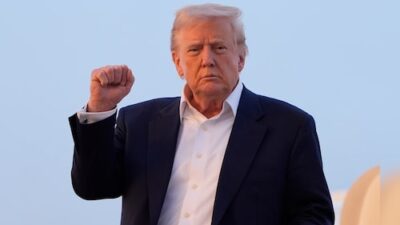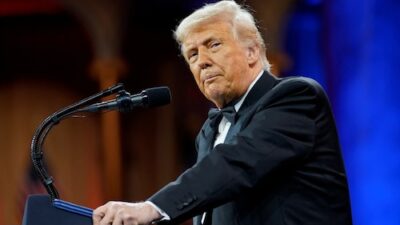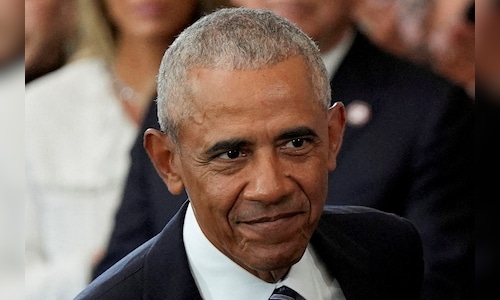
Below is a comparison of the two agreements:
Definition of Each Agreement
The agreements are fundamentally different. The “memorandum of understanding” that Trump signed is not a definitive deal; rather, it is a brief 14-point framework that was negotiated intermittently over several weeks.
This has initiated a 60-day negotiation phase aimed at establishing a full settlement for the nearly four-month-long conflict, with various challenges ahead regarding issues such as Iran’s nuclear program, sanctions relief, and the future status of the Strait of Hormuz.
In contrast, Obama’s agreement was a comprehensive document known as the Joint Comprehensive Plan of Action (JCPOA), spanning over 160 pages. This pact was specifically designed to limit Iran’s nuclear activities and included strict benchmarks. Trump, who criticized the Obama-era agreement as “horrible,” withdrew from it in 2018.
Trump’s negotiations have been bilateral, focusing on the relationship between the U.S. and Iran. Conversely, Obama included China, France, Germany, Russia, Britain, and the European Union in negotiations that lasted approximately two years.
Nuclear Commitment
Both agreements require Iran to commit, in writing, to refrain from pursuing nuclear weapons. Trump, who cited the nuclear threat as his primary justification for military action, has wrongly claimed that Tehran had never sought such weapons before.
Obama’s deal imposed strict limitations on Iran’s ability to generate weapons-grade uranium, aiming to extend the “breakout” time needed for the development of a bomb. Following Trump’s withdrawal from the JCPOA, the U.S. government affirmed that Tehran had complied with the terms.
Trump’s interim deal provides only a generalized framework for limiting Iran’s nuclear activities, lacking explicit commitments from Tehran aside from engaging in discussions during the 60-day negotiation period.
This hints at Iran’s willingness to address concerns regarding its near-bomb-grade uranium stockpile, such as the potential for “down blending” under the supervision of the International Atomic Energy Agency, a U.N. regulatory body. However, this decision would be deferred until a final agreement is reached.
The JCPOA entailed rigorous international inspections, while the MOU does not stipulate any future reinstatement of such processes.
Sanctions and Asset Recovery
Both agreements feature provisions for sanctions relief and unfreezing of assets – something Iran is even more eager for due to economic difficulties – but they approach this issue quite differently.
Obama lifted some sanctions early in the process but only after reaching a comprehensive agreement, gradually implementing further relief contingent upon Iran’s verified actions.
In contrast, Trump’s memorandum offers initial relief upfront, including immediate U.S. waivers for Iran to export oil, while final terms will be worked out later.
Additionally, it opens avenues for releasing billions of dollars in frozen assets, with ambiguity surrounding the timing of such actions.
Another provision proposes that the U.S. and its Middle Eastern allies establish a $300 billion fund for Iran aimed at economic development, though details concerning conditions and timelines remain vague.
This has attracted criticism from Iran hawks within Trump’s own Republican Party, who argue that he is conceding too much.
Trump has long criticized Obama for the return of $1.7 billion to Tehran from arms sales that had been frozen since 1981.
However, Trump, who has expressed his aversion to comparisons between his agreement and Obama’s, now appears poised to allocate many multiples more in funds to Iran.
The Strait of Hormuz
The JCPOA was solely focused on nuclear issues, a strategic decision made by the Obama administration, which believed including other regional concerns would jeopardize a final agreement.
In contrast, the MOU serves as the diplomatic groundwork for a potential resolution to a war Trump initiated with Israel on February 28, which has reverberated globally.
Consequently, one of its key components is an agreement to reopen the Strait of Hormuz, a vital oil shipping corridor that Iran effectively blocked. Iran insists on maintaining a management role over the strait, contrary to its position before the conflict, which could complicate negotiations.