However, new projections indicate that monetary policymakers are becoming increasingly divided regarding the future direction of rates, with some officials now contemplating a rate hike prior to any additional easing measures.
Updated forecasts revealed that Fed officials are weighing persistent inflation concerns against indicators of a robust economy. While some policymakers anticipate that rates will remain steady for the duration of the year, others contend that further tightening may be necessary if inflationary pressures continue.
Among the 19 members of the policy-setting committee, 18 provided interest-rate forecasts. Eight officials predict no changes this year, three foresee one rate hike, five expect two increases, and one member anticipates as many as four hikes.
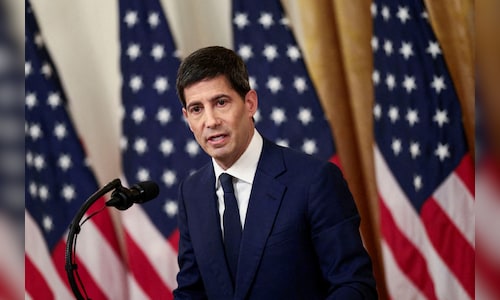
Fed Chairman Kevin Warsh informed reporters during a press conference that he is establishing five task forces to explore areas such as the Fed’s communication methods, the data sources utilized in policy decision-making, and the composition of quarterly economic projections, all aimed at ensuring the Fed is “clear-eyed and focused on the future.”
The central bank also updated its policy statement, eliminating previous language suggesting that the next move would likely be a rate cut. Instead, officials indicated a more data-dependent stance as inflation continues to exceed targets.
The Fed characterized economic activity as expanding at a “solid” pace, notwithstanding elevated uncertainty partly linked to the ongoing conflict in the Middle East. Policymakers acknowledged that inflation remains elevated, driven by supply chain disruptions and rising energy costs.
“The Committee will deliver price stability,” the statement emphasized.
Fed officials significantly revised their inflation forecasts. Headline inflation is now projected to average 3.6% this year, an increase from the prior estimate of 2.7%, while core inflation is anticipated at 3.3%, compared to 2.7% earlier.
Recent inflation data has bolstered these concerns. The Consumer Price Index increased by 4.2% in May, the highest level in three years, largely due to rising energy prices. Core inflation, which excludes food and energy, edged up to 2.9%.
Meanwhile, the Fed has adjusted its US growth forecast for 2026 to 2.2% from an earlier projection of 2.4%. The unemployment rate is expected to remain at approximately 4.3%.
First Published: Jun 17, 2026 11:53 PM IST