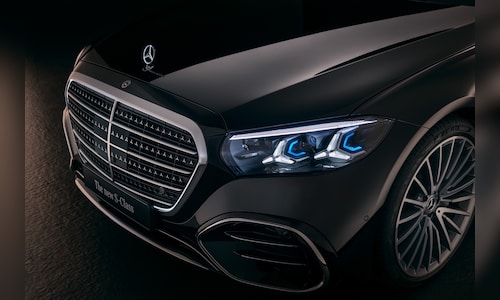
In an interview with CNBC-TV18, Mathias Geisen, a Member of the Board of Management at Mercedes-Benz Group, highlighted the substantial long-term potential in the Indian market, despite the luxury vehicle segment being relatively small at this time.
“Examining the demographics, we foresee significant growth,” Geisen commented. “We firmly believe that the demand for luxury and high-tech products is on the rise.”
Currently, India sells approximately 50,000 luxury cars each year, a small fraction of the total 4.5 million passenger vehicles sold. However, Geisen is optimistic about a transformative market shift within the next decade.
“We don’t envision the luxury segment remaining at 50,000 units in the next ten years,” he stated.
The executive cited increasing household incomes and wealth generation as pivotal factors that could boost the demand for premium automobiles.
“As household incomes and wealth levels rise, we anticipate substantial growth in the overall market,” Geisen added.
Mercedes-Benz
has noticed unique consumer behaviors in India when compared to many other markets. Geisen noted that Indian luxury car purchasers tend to be younger and prioritize both innovative technology and craftsmanship.
“Customers here are significantly younger compared to the global average,” he remarked. “They have a keen interest in craftsmanship but are equally captivated by technological advances.”
The company is also observing a stronger preference for high-end luxury models in India than in numerous other regions globally. High-end vehicles, including the S-Class and models above, comprise about 25% of Mercedes-Benz sales in India, versus around 15% worldwide.
Geisen indicated that this trend showcases the sophistication of Indian buyers and their eagerness to invest in premium products that seamlessly blend luxury, technology, and personalization.
The growth trend has intensified in recent years, especially post-pandemic. Geisen noted that the pace of growth in India has been particularly remarkable.
“The momentum in India is remarkably rapid,” he said, mentioning that Mercedes-Benz was the only luxury car manufacturer to achieve growth in the first quarter of the year.
The company also anticipates a rise in demand for premium electric vehicles as affluent consumers increasingly adopt new technologies. Electric vehicles constitute roughly 10% of global Mercedes-Benz sales and a comparable percentage in India, with higher adoption rates observed among high-end luxury buyers.
This positive forecast aligns with broader shifts in India’s consumer landscape. Once primarily seen as price-sensitive, India is witnessing a rise in affluent consumers ready to invest in premium experiences, cutting-edge technology, and globally recognized luxury brands.
While India’s luxury car market remains relatively small in absolute terms, it is emerging as one of the most closely monitored growth narratives for global premium car manufacturers. For Mercedes-Benz, the fusion of favorable demographics, increasing wealth, and evolving consumer expectations could position India as a pivotal luxury vehicle market in the coming years.