This fund aims to incentivize both parties to finalize an agreement, the source said, as Washington and Tehran gear up for signing on Friday.
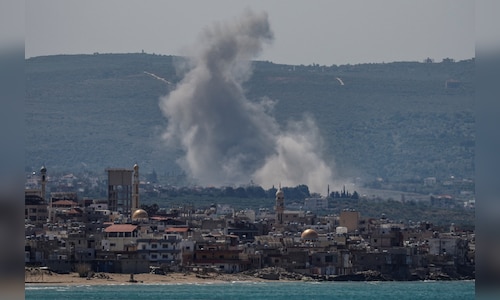
US and Iranian officials announced on Sunday that they had reached a framework to conclude their conflict, which started when US and Israeli forces struck Iran on February 28. The agreement includes lifting the US blockade of Iran and reopening the Strait of Hormuz, a crucial route for global oil and gas supplies.
This new fund is a private investment initiative, distinct from any reconstruction or reparations program and does not involve government funds or grants. The source indicated that companies from the US, Gulf Arab states, Asia, South America, and Africa have committed to provide financing.
A senior Iranian official mentioned to Reuters that Iran had initially sought $400 billion in compensation for war devastation from the US but that Washington had refused.
This led to the idea of the Reconstruction and Development Fund.
The proposed mechanism suggests contributions from regional countries in different forms, including securing loans, establishing credit lines, or directly financing the restoration of war-damaged facilities such as the Mobarakeh Steel complex, refineries, and airports, as well as broader infrastructure impacted by the conflict, according to the Iranian source.
Despite being one of the largest economies in the Middle East, Iran has seen minimal foreign direct investment over the past forty years, largely due to exclusion from global capital markets resulting from repeated US and international sanctions.
Iran holds the world’s second-largest proven natural gas reserves and the fourth-largest proven oil reserves.
It also boasts a young and educated population exceeding 92 million, a diverse industrial base, and significant untapped potential in areas like petrochemicals, mining, tourism, and agriculture.
The investment fund is entirely separate from ongoing negotiations regarding the lifting of US sanctions and the release of Iranian assets frozen abroad, as described by the source, who noted that the two are distinct financial initiatives with different objectives and timelines.
The fund will not be established or operational until a satisfactory final agreement is reached. The memorandum of understanding, once signed, is set to outline the process over the next 60 days.
”The fund will only be created after the final deal is signed,” the source explained. ”Throughout these 60 days, fund administrators will collaborate with Iranians and investors to plan and define projects.”
Neither Iran’s foreign ministry nor Pakistan’s foreign ministry, which helped facilitate the investment fund deal, immediately responded to requests for comments.
A White House spokeswoman referred to a CBS interview with Vice President JD Vance on Monday, where he indicated that Iran could access a $300 billion reconstruction fund supported by Gulf states if it complies with an agreement with Washington, which includes dismantling its nuclear program, eliminating its stockpile of enriched material, and adhering to a stringent inspection and enforcement regime.
The source did not disclose details on how the fund will be managed or by whom, emphasizing that critical aspects are still being finalized.
Companies from South Korea, Japan, Singapore, Malaysia, and the United States are among those that have made commitments, though a comprehensive list was not provided.
The 60-day memorandum serves as a framework, not a conclusive agreement, and US and Iranian negotiators are expected to engage on multiple fronts during that time, addressing nuclear issues, sanctions, and regional security matters.