In response to this growing interest, South Korea introduced the K-Tourism Innovation Task Force in September 2025 to enhance travel options that cater to fans. Concurrently, the Korea Tourism Organisation (KTO) has devised a plan to boost K-culture tourism and motivate travelers to discover sites outside Seoul, thereby invigorating regional tourism throughout the country.
One of the standout features of South Korea’s tourism scene is its vibrant fan cafe culture. These specialized cafés, dedicated to K-pop idols and groups, offer unique beverages, exclusive merchandise, photo displays, and fan-made decorations. More than just attractions, they serve as social spaces where visitors can engage with fellow fans from around the globe and dive deep into the country’s dynamic fandom culture.

Image: Reuters
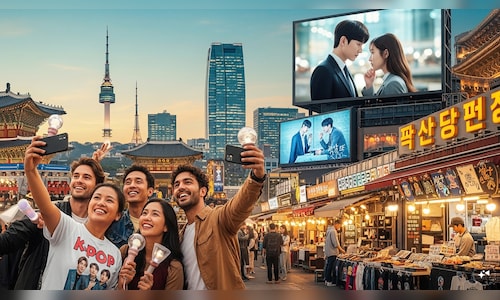
In Seoul, Myeongdong stands out as a pivotal area for K-wave tourism. Known for its high concentration of K-beauty shops, entertainment merchandise stores, and lively street food offerings, the district remains a key feature on K-culture travel agendas. Visitors frequently pair their Myeongdong experience with visits to traditional food markets and cultural sites nearby, creating a synthesis of modern pop culture and genuine local experiences.
On the other hand, Jeju Island—celebrated as South Korea’s beloved local retreat for its volcanic terrain, tangerine orchards, and picturesque coastlines—has seen a spike in interest since the success of the Netflix series When Life Gives You Tangerines. The show emerged as one of the most-viewed programs in various countries, including Vietnam, Thailand, and the Philippines, motivating fans to travel to its filming locations. In reaction, the Jeju Special Self-Governing Province has collaborated with the Jeju Contents Agency to create themed travel routes based on prominent sites from the series.

Image: Canva
As the global appeal of Korean entertainment continues to soar, the boundary between fandom and travel is becoming less distinct. Travelers are striving for more profound, immersive connections with the culture they engage with on screen. Supported by government initiatives and regional tourism strategies, South Korea is positioning itself as a destination where entertainment transcends mere viewing and transforms into a travel experience itself.
(Edited by : Priyanka Deshpande)