In an exclusive interview with CNBC-TV18, Mathew noted that the global tech landscape is undergoing a significant transformation driven by AI advancements, with semiconductors serving as the cornerstone of this change.
“2026 will be a year of convergence,” Mathew mentioned, highlighting the increasing intersection of edge AI, cloud intelligence, physical AI, and agentic AI within various industries.
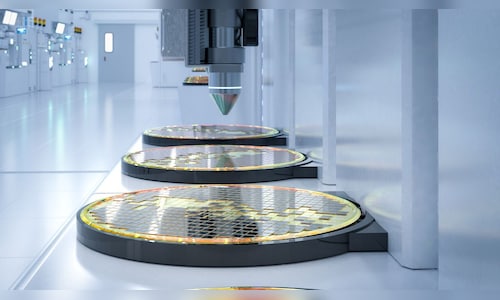
He pointed out that AI is already revolutionizing semiconductor design and development. Verification cycles that historically demanded substantial engineering effort are becoming more automated, while evolving AI workloads are reshaping demand within the semiconductor sector.
“Previously, we discussed CPUs, and then the spotlight turned to GPUs during the data center era. Now, CPUs are making a comeback due to agentic AI. This represents a significant shift,” he explained.
The return of CPUs underscores how rapidly tech assumptions can evolve, he observed, adding that semiconductor firms are well-positioned to leverage the growing AI ecosystem.
Mathew emphasized that India enters this new phase with advantages cultivated over decades as a global tech and digital services center. Although the nation may not have established a robust semiconductor manufacturing ecosystem in the past, the ongoing AI-driven tech cycle presents a new opportunity.
“We have been recognized for IT, digital transformation, and scale, gaining benefits over many years. Now is the time for us to transition into AI and semiconductors,” he stated.
The UST executive urged India to combine its engineering expertise with emerging AI capabilities to establish long-term competitiveness in semiconductor technologies.
He also noted a consistent rise in global interest in India’s tech ecosystem. UST is collaborating with governments, tech companies, and partners worldwide to introduce advanced AI capabilities and semiconductor knowledge into the country.
Mathew asserted that international partnerships will be crucial in propelling India’s ambitions in advanced technologies, especially as nations seek diversified supply chains and new innovation hubs.
“While scale is important, we must approach it intelligently,” he said, emphasizing that execution and ecosystem development will dictate how successfully India capitalizes on the AI and semiconductor landscape.