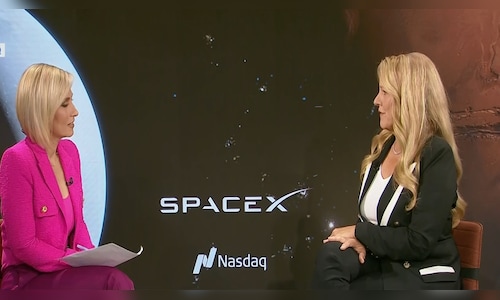
In an exclusive interview with CNBC after the company’s market debut, Shotwell discussed how emerging AI technologies could support the $28.5 trillion total addressable market mentioned in SpaceX’s prospectus.
“If you consider solely the use of AI by individuals, reaching those numbers seems challenging,” Shotwell remarked.
“However, when you factor in digital humans, humanoid robots, and the eventual self-driving status of all vehicles worldwide, each of these will require AI computing and communications,” she continued.
These statements offer insight into SpaceX’s vision for its future in an AI-driven economy, where billions of connected devices, robots, and autonomous systems require continuous access to computing resources and communication networks.
Shotwell noted that the rise of these technologies could lead to significant demand for both AI infrastructure and connectivity solutions.
“All this processing power distributed globally will need to connect back home,” she explained. “I’m really excited about this synergy, as well as the necessity for all these systems to ‘phone home’, since they will be using Starlink for that.”
Her comments highlight the strategic significance of Starlink, SpaceX’s satellite internet venture, as the company aims to broaden its scope beyond launch services to include communications, artificial intelligence, and computing infrastructure.
Also Read | SpaceX soars 23% in Wall Street debut, makes Elon Musk world’s first trillionaire
On Friday, SpaceX commenced trading on the Nasdaq under the ticker SPCX, marking the largest initial public offering in history and one of the most highly anticipated stock market debuts in recent memory.
The stock opened at $150, climbing to $166.90 by approximately 12:20 pm ET, resulting in a market capitalisation of around $2.18 trillion. Forbes estimated Musk’s net worth at about $1.1 trillion following the listing.