The S&P 500 surged 1.4%, rebounding from a consecutive decline that brought it back to early May levels. The Dow Jones Industrial Average increased by 839 points, or 1.7%, as of 1:45 pm Eastern time, while the Nasdaq composite rose by 1.8%.
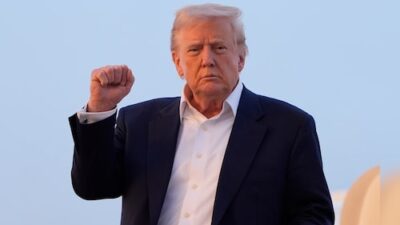
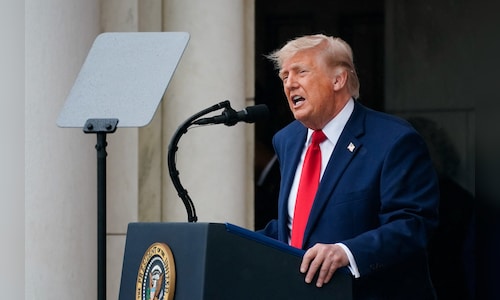
Stocks began to rise immediately after Trump posted on his social media platform that “discussions and final points have been, in both concept and great detail, approved by all parties involved,” adding that the time and place for the signing would be “announced shortly”.
The price of a barrel of benchmark US crude dropped by 3.2% to $87.19 after earlier gains were reversed. Brent crude, the international benchmark, decreased by 3.5% to $89.89 per barrel, yet remains above its roughly $70 price before the conflict began.
An end to hostilities could reopen the Strait of Hormuz, allowing oil tankers to resume transporting crude from the Persian Gulf to global markets.
Concerns had been elevated as the United States and Iran exchanged attacks in recent days following a fragile ceasefire that lasted more than a month. Although these strikes have heightened regional tensions, they have been less intense compared to the early stages of the war, and talks to extend the ceasefire are ongoing.
Soaring oil prices have driven inflation upward, and a report released on Thursday indicated that prices at the wholesale level in the US rose more in May than economists had anticipated. This trend is being felt globally, prompting the European Central Bank to become the first major central bank to raise interest rates in response.
While higher rates can help contain inflation, they also have the effect of slowing economies and pressuring prices for various investments, including stocks and cryptocurrencies. Investments viewed as overvalued are particularly impacted, and some critics have labeled the artificial intelligence sector as a bubble due to excessive investment.
Significant fluctuations in AI stocks have influenced the broader U.S. market over the past week, as these stocks transitioned from reaching record highs to suddenly declining. The main worry is whether these stocks rose too rapidly due to AI enthusiasm, leading to instability that can shift dramatically, sometimes within hours.
For instance, Marvell Technology increased by 6.6%. It recently experienced a volatile phase, with a drop of 16.7%, a surge of 9.6%, followed by two consecutive days of more than a 5% decline. Prior to this, it saw an impressive one-day spike of 32.5%—the highest in its history—after Nvidia CEO Jensen Huang suggested it could become “the next trillion-dollar company,” valuing it at slightly over $190 billion at that time.
Stocks of companies involved in chip manufacturing saw substantial gains, with Lam Research rising by 11.2% and KLA increasing by 11%.
This growth countered an 11.6% drop for Oracle. Although it reported stronger profits for the latest quarter than analysts had predicted, it also indicated plans to raise $40 billion this fiscal year through borrowing and stock sales. This follows its $48 billion raised last fiscal year aimed at funding AI initiatives.
Other companies have encountered stock downturns for announcing significant investments in AI, raising questions about whether such expenditures will yield the promised profits and productivity.
In the bond market, the yield on the 10-year Treasury dipped to 4.47% from 4.55% late Wednesday as falling oil prices alleviated pressure on inflation.
Stocks of smaller companies tend to benefit the most from easing interest rates, and the Russell 2000 index, tracking the smallest U.S. firms, surged by a leading 2.6%.
Internationally, stock markets in Europe experienced modest gains following a mixed performance in Asia.
London’s FTSE 100 increased by 0.5%, while Hong Kong’s Hang Seng decreased by 0.7% for two of the day’s more significant moves.