On Sunday, Israeli forces captured Beaufort Castle, a landmark in southern Lebanon that stands over 700 meters (3,000 feet) above sea level. It provides extensive views across Lebanon and into northern Israel and has served as a military stronghold for nearly a thousand years.
Israel states that its operations are aimed at the Iranian-supported Hezbollah militant group, which holds significant political influence in southern Lebanon and has launched numerous missiles and drones targeting Israeli soldiers and northern Israel.
Israeli officials have urged civilians in southern Lebanon to evacuate to avoid being caught in crossfire. Lebanese Prime Minister Nawaf Salam criticized Israel on Saturday for a “policy of total destruction of cities and towns.”
Since the onset of fighting on March 2, following the beginning of the Iran war, over 3,300 people, including many children, have died in Lebanon. Approximately 1 million individuals have been displaced, while at least 25 Israeli soldiers and a defense contractor have also lost their lives, along with two civilians in northern Israel.
Here’s what you need to know:
Beaufort, known as Al-Shaqif, was originally constructed as a Crusader castle in the 12th century and has also been occupied by Saladin’s forces, the Mamluks, Ottomans, the French mandate, the Palestinian Liberation Organization, and the Israeli military until 2000, when it was partially restored for public visits.
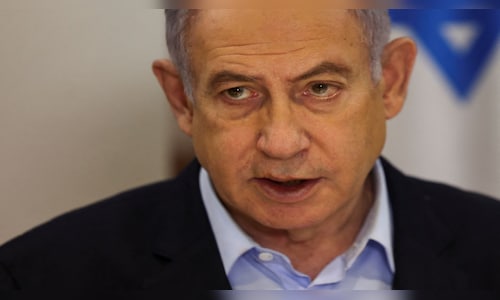
Israeli Prime Minister Benjamin Netanyahu remarked that Beaufort represents “a symbol of a heroic battle for our fighters, but also highlights the deep division between us.”
According to Orna Mizrahi, a former deputy director in the government’s National Security Council, the military’s return feels cyclical. “There’s a sentiment of, ‘For what?’” she noted.
The name “Beaufort” evokes a sense of victory for the Israeli military, which seized it in 1982, but also signifies the substantial costs of defending it before it was relinquished in 2000, according to Mizrahi, now a senior researcher at the Institute for National Security Studies.
Mizrahi believes Israel will likely eventually cede control of the fortress, despite Defense Minister Israel Katz’s insistence that it should become part of Israel’s permanent security zone in southern Lebanon.
However, military presence there won’t resolve the conflict with Hezbollah, Mizrahi explained: “Yes, we are impacting them operationally, but we must also seek political and diplomatic solutions.”
Israel has long viewed Hezbollah as a threat. This Shiite Muslim armed group formed in 1982 in response to Israeli occupation. Hezbollah has targeted northern Israeli communities and participated in the 2023 conflict in Gaza in support of the Palestinians.
During months of warfare, Israel significantly weakened Hezbollah, leading to a U.S.-brokered ceasefire in late 2024 after indirect negotiations, which resulted in Israeli withdrawal from all but five strategic hilltops along the border.
The new Lebanese government pledged to disarm groups like Hezbollah, but the militants resisted. Simultaneously, Israel alleged that Hezbollah was rearming and rebuilding.
On March 2, Hezbollah fired at Israel again, prompting an Israeli invasion of southern Lebanon. Recently, Israel has focused on preventing Hezbollah from harming its forces and civilians with a new type of fiber-optic drone, widely utilized in the Ukraine conflict.
The U.S. facilitated a ceasefire beginning in mid-April, but it has not held up like the ceasefire involving the Iran war.
As Israeli forces executed airstrikes and ground operations, hundreds of thousands of individuals fled southern Lebanon. Many are now sheltering in Beirut, where hundreds have died, including during a swift, intense bombardment in April.
Currently, Israeli forces control extensive areas in southern Lebanon and have destroyed homes and historical sites. Lebanon’s Prime Minister Salam stated on Saturday, “Israel is attempting to uproot Lebanon’s memory and erase the people’s history.”
Historic negotiations between senior officials from Israel and Lebanon commenced in April in Washington, marking the first talks in over thirty years between these countries that lack formal diplomatic ties.
Last Friday, the first direct military discussions occurred in decades.
Negotiation topics include the withdrawal of Israel from southern Lebanon, the deployment of Lebanese forces in the region, and the disarmament of Hezbollah, which has refused to surrender its weapons while Israeli forces remain present.
Talks are set to continue this week. Notably, Hezbollah is not participating and has stated it will not accept any outcomes of the discussions. The group believes that negotiations should leverage Iran’s influence and views the Lebanese government as weak, a sentiment echoed by others in the country.
The Lebanese populace remains divided regarding the talks, which sparked protests upon announcement. While many Lebanese are frustrated with Hezbollah for the devastation it has caused, there is also a wariness towards Israel.
On Saturday, the Lebanese Prime Minister described the direct negotiations as “currently the least costly option,” asserting they do not imply surrender and recognizing the uncertainty of their outcomes.
Also Read: Israeli Army says ‘all options on table’ for Lebanon ground invasion