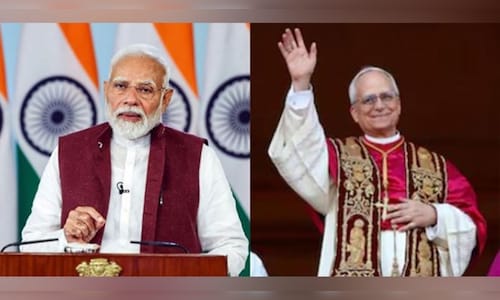
“In an age dominated by artificial intelligence, as human dignity faces challenges from emerging forms of dehumanisation, it is our duty to uphold our humanity,” stated Pope Leo XIV. He cautioned against the tendency to reduce “the mystery of the person” to mere “data and performance.”
Interestingly, Prime Minister Narendra Modi has consistently expressed a remarkably similar viewpoint on AI in recent years.
At the India AI Impact Summit earlier this year, PM Modi remarked: “Technology should serve humanity, not replace it.” He emphasized the importance of prioritizing a “human-centric approach rather than a machine-centric one,” advocating for innovation that is “sensitive and responsible instead of reckless.”
Shared concerns over dehumanisation and inequality
Both leaders increasingly view AI not just as a technological or economic issue, but as a profound societal and moral challenge.
Pope Leo XIV cautioned that AI systems could transform human beings into quantifiable outputs driven by algorithms and efficiency metrics. Similarly, PM Modi has warned that AI “must not reduce human beings to mere data points or raw materials.”
This overlap extends to worries about inequality and the concentration of power. The Pope highlighted the danger of allowing technological control to rest with “a select few,” while India’s PM has been a strong proponent of inclusive AI governance that benefits the Global South and developing nations.
In various international forums, PM Modi has stressed that access to computing power, datasets, and AI infrastructure should not become centralized among a small group of countries or corporations.
AI, jobs and the future of society
Both leaders appear to share common ground regarding employment and automation.
The Pope called for protective measures, worker inclusion, and responsible transitions as AI transforms industries and labor markets. Meanwhile, PM Modi has continuously highlighted the importance of skilling, workforce readiness, and digital inclusion as vital components in adapting to disruptions caused by AI.
The overarching message from both figures is unmistakable: artificial intelligence must not serve as a tool for domination, exclusion, or dehumanisation. Instead, they contend, the future of AI should be anchored in ethics, public welfare, and the safeguarding of human dignity.
(Edited by : SHEERSH KAPOOR)
First Published: May 29, 2026 5:51 PM IST