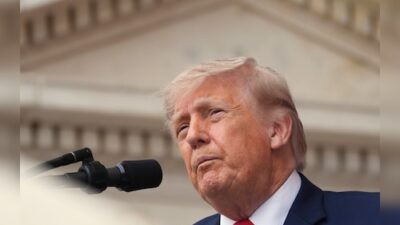
President Donald Trump announced he would make a “final determination” regarding a preliminary deal to extend the truce with Iran. His remarks followed uncertainty regarding the status of an agreement aimed at prolonging the current ceasefire for 60 days, during which the US and Iran would discuss the future of Tehran’s nuclear program, according to a source familiar with the situation.
Nevertheless, Vice President JD Vance indicated earlier that it was premature to determine “when or if” any agreement with Iran might materialize. Treasury Secretary Scott Bessent asserted that “the teams have been going back and forth” when asked if an interim agreement had been secured. Iran’s Tasnim news agency reported that the text of the interim deal has changed in recent days and remains unfinished, without providing further details.
Also Read: Trump says US naval blockade of Strait of Hormuz ‘will now be lifted’
Crude prices weakened in May amid speculation that some form of agreement might be achieved, although previous claims of progress have often been followed by protracted stalemates.
In recent days, several vessels passing through the strait have been attacked, highlighting the “very real” risks that persist for shipowners in the Persian Gulf, regardless of whether a peace agreement is signed, Chevron Corp. CEO Mike Wirth stated.
“There has still been kinetic activity this week, some of which has been reported in the media — some of which has not,” Wirth mentioned on Bloomberg TV on Friday. “We see risks as very real still in that environment.”
However, Wirth noted that oil traders appear to be wagering that the conflict is approaching resolution, keeping price increases subdued. “The market sentiment indicates that we are closer to the end rather than the beginning,” he observed.
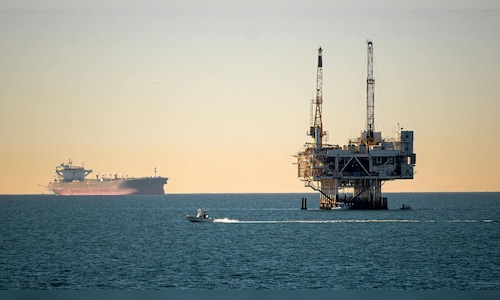
Although the effective closure of Hormuz — affected by blockades from both Washington and Tehran — has restricted global energy supplies, various factors, including increased US exports, decreased Chinese imports, and emergency reserve releases, have mitigated the worst market impacts.
Approximately one-quarter of the non-Iranian large oil tankers that were trapped in the Persian Gulf when the Iran war began have managed to escape.
Also Read: Trump could become first living person on a US bill in 150 years with $250 proposal
At this point, it remains uncertain how the sticking points in the negotiations — such as the Islamic Republic’s nuclear program, Iran maintaining control over Hormuz, and sanctions relief — will be resolved. The reopening of the waterway and Iran’s surrender of highly enriched uranium were cited as Trump’s “red lines” essential for any agreement, Bessent remarked.
Even if a ceasefire extension is reached, several obstacles could hinder the resumption of oil flows. These include the necessity to clear mines in the Hormuz waterway, the potential months required to restart shut-in fields, and the repairs needed for energy infrastructure damaged by drone and missile strikes. Additionally, vessels would take weeks to reach importing countries.
“Iran must adhere to all agreements, which is a substantial demand for the market,” stated Dennis Kissler, head of energy trading at BOK Financial Securities Inc. “While an increase in traffic through the Strait of Hormuz is encouraging, we will need to see that stabilize for a period to justify WTI prices in the mid- to low-$80/bbl range.”
Recent data indicated growing tightness in the US as the crisis continued. Among the statistics, distillate stockpiles dropped to their lowest levels in over twenty years, and crude stocks at the Cushing, Oklahoma, hub decreased for the fifth consecutive week to 23 million barrels, bringing them closer to the 20-million-barrel threshold generally regarded as the minimum operating level.
Also Read: US delegation to visit India next week to advance interim trade deal talks, says envoy