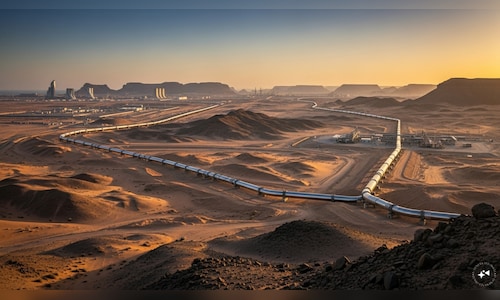
In a discussion with the Atlantic Council on Wednesday, May 20, Sultan Ahmed Al Jaber, CEO of Abu Dhabi National Oil Co (ADNOC), stated that the pipeline will enhance ADNOC’s export capacity through Fujairah, a port located on the Gulf of Oman, away from the Strait of Hormuz.
“Currently, a substantial portion of the world’s energy still traverses too few chokepoints. This reality prompted the UAE to invest in infrastructure bypassing the Strait of Hormuz over a decade ago. It is also the reason we are advancing our second pipeline project, scheduled for 2025,” he elaborated.
He disclosed that operations for the second pipeline are projected to start in 2027, with half of its construction already completed. The UAE has expedited the building process after Iran obstructed the Strait of Hormuz earlier this year.
The blockade, initiated in early March, has significantly hindered oil and gas exports from the UAE and other Gulf Arab nations. Currently, the UAE is utilizing an existing pipeline to Fujairah with a capacity to transport up to 1.8 million barrels of oil per day.
Al Jaber referred to the closure of Hormuz as the “most severe supply disruption on record.” He reported that over 1 billion barrels of oil have been lost since the blockade started, adding that the “loss increases by nearly 100 million barrels each week.”
He further noted that even if the conflict were to cease immediately, it would require at least four months for oil flows to return to 80% of normal levels. Al Jaber mentioned that complete recovery might not occur until the first or second quarter of 2027.
“This is not merely an economic issue,” Al Jaber said. “It establishes a dangerous precedent if a single nation can effectively seize control of the world’s most vital waterway.”