What he received was a warmer reception in tone rather than substance, as analysts observe that China’s focus for 2026 is primarily on the US and maintaining a stable economic environment at home for its 15th Five-Year Plan.
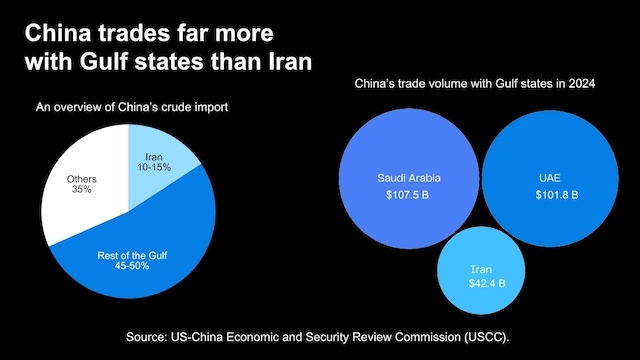
Despite this, Iran’s strategic significance to China remains high, especially for the world’s leading crude importer. This reliance has grown even more critical, as China buys approximately 15% of its oil imports—around $2 billion worth—from Iran each month, according to Kplr.
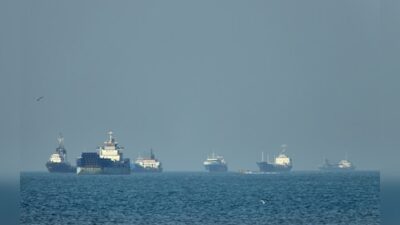
Now entering its third month, the war is disrupting China’s more extensive energy connections with other Gulf nations, essential to Beijing’s crude imports and overall trade.
In 2024, China’s two-way trade with Saudi Arabia and the UAE was valued at $107.5 billion and $101.8 billion, respectively. In contrast, trade with Iran stood at only $42.4 billion, as reported by the US-China Economic and Security Review Commission (USCC). The closure of the Strait of Hormuz has further hindered these trade flows.
While Beijing refers to Tehran as “a trustworthy strategic partner,” China specialist Sriparna Pathak argues that Iran serves more as leverage than a relationship based on loyalty for China. Pathak is a professor of China Studies and International Relations at OP Jindal Global University.
“China desires Iran to remain stable enough to provide oil but not strong enough to draw Beijing into war,” she told CNBC-TV18. In turn, Tehran is ensuring it is not “sacrificed in US-China discussions.”
“Beijing provides assurances, not irrevocable commitments,” she added.
China has regularly purchased discounted Iranian oil and supplied dual-use goods, offering Tehran a vital economic lifeline despite Western sanctions. However, it has refrained from any substantial support that would significantly change the conflict’s dynamics or complicate the upcoming summit with Donald Trump in Beijing on May 14-15.
This focus has clear ramifications. US President Donald Trump has stated that Xi Jinping personally assured him in a letter that China does not intend to send new weapons to Iran.
Anushka Saxena from the Takshashila Institute believes that Beijing has more pressing matters to discuss with the US, and it must carefully navigate the situation without a clear resolution to the war in West Asia.
“China’s connection with Iran is its own responsibility and unlikely to be a major point of contention with the US.”
“Xi is unlikely to allow discussions on Iran to derail his meeting with Trump in Beijing. There are other critical topics regarding technology trade and talent exchanges between China and the US that will dominate the Summit,” Saxena told CNBC-TV18.
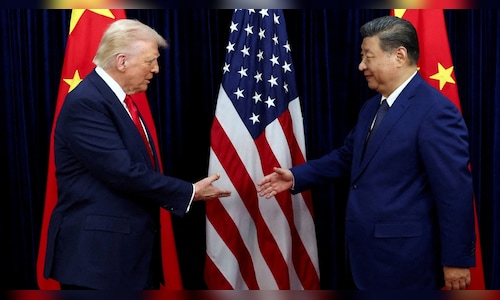
This week will mark Trump’s first visit to China since 2017, although the two leaders met briefly at APEC in Busan, South Korea, in October 2025. That meeting resulted in a tenuous trade truce, reducing tariffs on Chinese goods from a peak of over 140% to 47%. This truce remains incomplete, with US goods trade with China plummeting to $414.7 billion in 2025—a nearly 30% drop from the previous year.
The agenda includes unresolved issues surrounding semiconductors, rare earth export controls, electric vehicles, and AI—an extensive list of bilateral grievances that have developed since Trump’s first term. Against this context, analysts suggest that Iran is not a topic that Beijing intends to emphasize.
Pathak further observed that China has not taken any “game-changing” actions regarding military aid, bases, or escalation guarantees. “It will maintain open channels discreetly while publicly advocating for de-escalation. No direct military involvement, no red lines drawn for Iran,” she stated.
The US has taken note of Beijing’s “cautious approach,” with the Trump administration interpreting it as a strategy to avoid antagonizing other Gulf nations, as indicated by a mid-March USCC report.
“Beijing has restricted its official support for Iran after US and Israeli actions, limiting responses to diplomatic statements decrying the violations of international law, condemning the death of Ayatollah Ali Khamenei, and urging an immediate halt to attacks and dialogue,” the report states. This was prior to Wang Yi’s meeting with Araghchi, but China’s diplomatic stance has not undergone significant changes since that meeting.
The war has inadvertently allowed Beijing to position itself as a responsible power. Hosting the Iranian foreign minister also enabled Beijing to assert itself as an equal player alongside the US.
The clearest indication of Iran’s position within Beijing’s priorities may not stem from what Wang Yi discussed with Araghchi, but rather from what Xi and Trump address—or avoid—during their meeting in Beijing this week.