The dollar has decreased by roughly 10% against other major currencies since President Donald Trump took office, a decline that may be influencing Americans’ worries about rising costs.
“It’s like a hidden tax,” remarks economist Thomas Savidge from the American Institute for Economic Research. “The purchasing power of your dollar is going to diminish.”
An overview of the dollar’s status and its implications for you: Historical dollar decline
The US Dollar Index, which gauges the dollar against other key currencies, experienced its most significant six-month decrease in over 50 years during the first half of 2025. While the decline hasn’t worsened, the dollar index remains approximately 10% lower than at the start of Trump’s presidency.
A strong dollar reduces the cost of imports and helps to control inflation. Conversely, a weak dollar can elevate prices on international goods while benefiting American exports.
US presidents have traditionally supported a strong dollar, even as they implemented policies that sometimes led to a weaker currency. Trump has suggested that a strong dollar puts the US at a disadvantage and that a weaker dollar benefits American industry. True to his style, he has been quite direct in his views.
“You can earn a lot more with a weaker dollar,” he stated last year, reflecting his preference for a declining dollar.

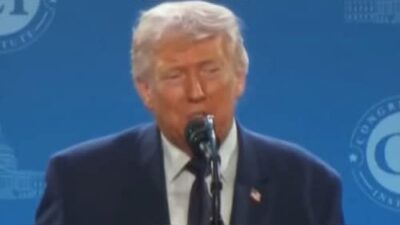
US President Donald Trump address to the nation on April 1 (screengrab)
Large multinationals gain
Trump isn’t alone in highlighting the advantages of a weaker dollar.
Recently, corporate earnings calls have been filled with mentions of how a declining dollar has benefited companies like Philip Morris and Coca-Cola, with executives using phrases such as “favorable currency impact” to describe how the drop has positively influenced their bottom lines.
“In many instances, a weaker dollar has been beneficial,” Elie Maalouf, CEO of InterContinental Hotels, stated on a February call announcing increased profits and revenues.
For large multinational companies operating overseas, a weaker dollar can enhance sales for their products, which suddenly appear cheaper. However, the majority of US businesses focus on domestic customers, and for those reliant on imports, the scenario is quite different.
Travis Madeira, a fourth-generation lobsterman and co-founder of the lobster-shipping company LobsterBoys, makes around 80% of his sales in the US, unlike some rivals who primarily export.
“The exporters will have the advantage when the dollar weakens,” Madeira says, noting his increased costs for importing bait and Canadian lobsters. “These competitors will have a bit of leverage over us.”
Smaller businesses affected
Even for companies that have international operations, the dollar’s decline can impose challenges. While many large firms hedge against currency fluctuations, smaller businesses often find themselves more vulnerable to such changes.
David Navazio, CEO of Pennsylvania-based Gentell, which manufactures bandages and medical supplies, operates facilities in Brazil, Paraguay, Canada, New Zealand, and the UK. In each of these regions, the dollar’s depreciation has raised Gentell’s expenses.
Gentell has been compelled to increase some prices due to currency shifts, adding to other difficulties like tariffs and war-induced spikes in fuel prices.
“Just a year ago, none of these were concerns,” he states. “And it ultimately impacts the consumer.”
Rise of other currencies
American consumers feel the effects of a falling dollar more acutely during international travel or when buying directly from foreign sellers.
Travel to Mexico, the top international destination for Americans, and you’ll discover your dollar is approximately 16% weaker against the peso compared to early 2025. Other currencies, including the Swiss franc, South African rand, Danish krone, Swedish krona, and Euro, have also seen declines in the range of 10% to 17%.
As for imported goods in the US, while there is an effect, it’s tougher to quantify. Many economists estimate that in developed nations like the US, only about 5% to 10% of a currency dip translates to consumer prices.
However, it adds to existing pressures, especially given other influencing factors.
Take coffee, one of the grocery items that has seen significant price increases in the last year. Brazil, the leading supplier of coffee to the US, has witnessed a 13% drop in the dollar’s value against the real. Currency changes can have more pronounced effects in developing economies, and even though only a small portion may contribute to rising coffee prices, every bit contributes to the overall increase. In the last year, coffee prices in the US have surged nearly 19%, according to government data.
 Anticipate further fluctuations
Currency values are in constant flux, and while the recent decline of the dollar is significant, it has touched lower levels during the presidencies of Trump’s predecessors, going back to the inception of the Dollar Index in 1973 during Richard Nixon’s administration.
Kenneth Rogoff, an economist at Harvard University and former chief economist at the International Monetary Fund, states that while “many of Trump’s policies are detrimental to the dollar,” he believes its decline was inevitable regardless of the administration.
“The dollar had been on a 15-year bull run,” he remarked. “I would argue that the dollar is still significantly overvalued, and over the next five or six years, it might drop by 15 percent.” What implications does this have for American consumers? Rogoff suggests that commodity prices are likely to rise, particularly with the influences of the Iran conflict on fuel prices.
“They are simply going to increase,” he notes, “regardless of the dollar’s status.”