The development was carried out by the Department of Telecommunications (DoT) in partnership with the National Disaster Management Authority (NDMA).
Central to the system is the Integrated Alert System, SACHET, created by the Centre for Development of Telematics (C-DOT). This indigenous platform is already functioning across all states and Union Territories, having sent over 134 billion SMS alerts in more than 19 languages.
The system utilizes the widely recognized Common Alerting Protocol (CAP), as advised by the International Telecommunication Union.
Working of the new system
The upgrade integrates Cell Broadcast (CB) technology with SMS, allowing authorities to send alerts to all mobile phones within a specific area simultaneously, rather than individually.
Unlike SMS, which may be delayed in high-traffic situations, CB messages are sent directly from mobile towers to devices on a dedicated channel, enabling alerts to reach millions almost instantly.
The system is geo-targeted, ensuring that only individuals physically located in impacted areas, like coastal regions during a tsunami warning, receive notifications.
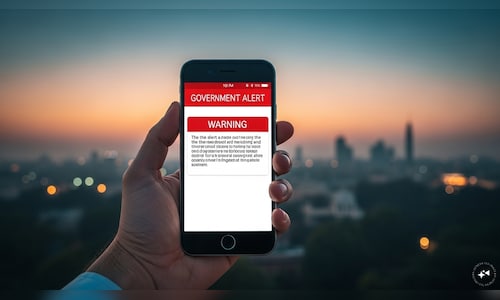
Messages are crafted to override typical notification settings: they can appear as prominent pop-ups, potentially emit loud alert tones or vibrations, and remain visible until the user acknowledges them.
This technology, being broadcast-based, does not depend on specific phone numbers, allowing it to reach even roaming users or devices without straining network capacity.
Types of alerts to expect
Officials indicate that the system is designated for both natural and human-made emergencies, including earthquakes, tsunamis, lightning strikes, and hazards like gas leaks or chemical spills.
Alert types may encompass:
- Advance warnings (e.g., severe weather, seismic activity)
- Emergency notifications (e.g., evacuation orders, hazardous leaks)
- Safety guidelines (do’s and don’ts during crises)
- Location-specific guidance, such as evacuation routes or designated shelters
Messages will be disseminated in multiple languages, reflecting the region and device settings.
Expectations for the May 2 trial
During the launch exercise, test alerts will be distributed to mobile devices in all state capitals, including Delhi-NCR, in English, Hindi, and various regional languages.
The government has provided the specific test message that will be shared:
“India initiates Cell Broadcast leveraging indigenous technology for an instant disaster alert system for its citizens. Alert citizens create a safe nation. No action is required from the public upon receipt of this message. This is a test message.”
“भारत द्वारा स्वदेशी तकनीक का उपयोग करते हुए अपने नागरिकों के लिए त्वरित आपदा चेतावनी सेवा हेतु सेल ब्रॉडकास्ट का शुभारंभ। सचेत नागरिक, सुरक्षित राष्ट्र। इस संदेश की प्राप्ति पर जनता से किसी प्रकार की कार्रवाई की अपेक्षा नहीं की जाती है। यह एक परीक्षण संदेश है।”
These messages will be displayed as on-screen alerts clearly labeled as test notifications.
The alerts may present as flash messages or pop-ups on mobile screens, contingent on the device and network compatibility.
The government has reassured citizens to remain calm, emphasizing that the initiative aims to confirm the system’s efficiency in providing rapid and reliable alerts during genuine emergencies.