Are prediction markets secure venues for news enthusiasts to speculate on events, or are they merely hubs of insider trading? There’s a lot at stake as states pledge to tightly regulate or even eliminate what they see as unlawful gambling enterprises. Even the Trump family might be affected as they prepare to launch their own prediction market.
The fairness of prediction markets currently hinges partly on the trading platform. Each has various internal policies and differing regulations, although recent news indicates they are encountering growing pains — prompting concern from the authorities.
One major issue is that outsiders cannot determine who is making the winning bets, raising fears that some users are trading based on confidential information and prompting calls for federal intervention.
“There has been a very laissez-faire” attitude toward the industry,” stated Richard Warr, a finance professor at NC State University. “Regulation always takes time to catch up.”
Polymarket versus Kalshi
These are the two leading players in the field but take different approaches to business.
Polymarket primarily operates outside the US and presents itself as a rebellious entity. It was even prohibited from operating in the US for a period due to non-compliance with regulations set by the Biden administration.
Polymarket utilizes cryptocurrencies for settling bets, allowing users to remain anonymous. Critics argue this creates opportunities for those with inside information to gamble, although experts note that Polymarket should identify such individuals based on verified account information.
Kalshi, a US-regulated exchange since 2020, requires users to provide identification, thus knowing their identities while keeping them confidential from other traders. Operating domestically, it adheres to US “Know Your Customer” regulations to prevent money laundering and other illegal activities.
In its quest for clients, Kalshi seeks to present itself as a responsible market participant.
“Not all prediction markets are the same,” said Kalshi spokesperson Elisabeth Diana amid growing calls for stricter regulations following the ceasefire bets. She added, “We back Congress and regulators in their efforts to combat insider trading.”
Capturing Maduro and profiting
The latest allegations of insider trading emerged this past week following the arrest of a soldier suspected of utilizing confidential information to place bets on Polymarket ahead of the capture of former Venezuelan leader Nicolas Maduro.
Polymarket asserted it had alerted federal authorities regarding suspicious activity related to the soldier’s account, but it’s uncertain if the public views this as evidence of effective monitoring or an overwhelmed platform. “We flagged this, referred it, and cooperated throughout the process,” posted Polymarket CEO Shayne Coplan on X. “This kind of activity occurs regularly behind the scenes, contrary to popular belief.” Kalshi took a different stance, highlighting that the same soldier — Gannon Ken Van Dyke, who profited $400,000 from his trades — had attempted to place a bet on Maduro earlier on Kalshi but failed to meet the platform’s standards and was rejected.
“Unlike competitors whose trading occurs mainly offshore and unregulated, we prohibit insider trading and do not allow war markets,” said a Kalshi spokesperson to the AP.
Israeli soldiers and politicians
Earlier this year, authorities in Israel arrested two soldiers for allegedly trading based on confidential information related to military operations against Iran last year, among other matters.
On Wednesday, Kalshi revealed that three politicians running for federal office had engaged in betting on their own elections. The candidates, one running for the Senate in Virginia and two congressional hopefuls from Texas and Minnesota, faced fines and five-year bans from Kalshi.
The industry is striving to bolster its standards.
Last month, Kalshi announced it would prohibit political candidates from betting on their own campaigns, and it would proactively block anyone involved in college or professional sports from trading contracts related to the sports they play or are associated with.
Polymarket has also recently updated its regulations to make it clear that users cannot engage in trading contracts where they may hold confidential information or influence the event’s outcome.
State enforcement
The federal government argues that oversight belongs to the Commodity Futures Trading Commission, maintaining that prediction markets are not subject to state gambling laws.
It asserts that the CFTC already governs financial derivatives offered by banks to companies as a risk hedge, claiming these prediction market bets are similar.
However, some states vehemently reject this view.
“Gambling by another name is still gambling,” declared New York state attorney general Letitia James after suing two emerging players — Coinbase and Gemini — for allegedly running illegal gambling operations. “It is not exempt from regulation.” In major states like California and Texas, where bettors exploit the markets to bypass sports betting bans, opposition to the CFTC’s endorsement of prediction markets has been particularly strong.
“I don’t recall the CFTC having authority over the derivative market’ of LeBron James rebounds,” wrote Republican Gov. Spencer Cox of Utah, responding to a social media post by CFTC chairman Michael Selig in February. Cox pledged to use “every resource” to obstruct the market from operating in his state.
Congress is also promising a crackdown.
Legislators from both parties are advocating for increased supervision of betting on conflicts, assassinations, terrorist acts, and an individual’s death. Federal law already grants the CFTC the power to prohibit certain so-called event contracts, but some lawmakers are pursuing an outright ban.
“There is no justification for betting on lives,” stated Democratic Sen. Adam Schiff last month, noting that wagers on warfare could potentially alert US adversaries, posing national security risks.
Trump’s perspective
The Trump family stands to gain financially if the industry expands, adding yet another layer of complexity to a presidency filled with conflicts of interest.
His eldest son, Donald Trump Jr., has an interest in Polymarket through a venture capital fund in which he is a partner. He also serves as an advisor to both Polymarket and Kalshi. Furthermore, the Trump organization that manages the Truth Social platform plans to develop its own prediction market called Truth Predict.
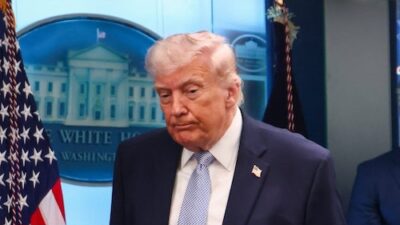
As for the former president, it remains unclear whether he will advocate for stricter regulations, though he has expressed some criticism.
“I was never much a supporter, and I don’t like it conceptually, but it is what it is,” he remarked Thursday, regarding online betting. “Presently, I think I’m not pleased with any of that stuff.”