US President Donald Trump announced that a senior delegation from the United States is on its way to Islamabad for new discussions with Iran, despite Tehran showing hesitance to engage, thereby creating uncertainty regarding urgent diplomatic efforts as a ceasefire deadline approaches, as reported by the New York Post.
Trump stated that Vice President JD Vance, special envoy Steve Witkoff, and adviser Jared Kushner are slated to arrive in Pakistan later on Monday to advance negotiations. However, the White House has yet to confirm the details regarding the delegation or their travel arrangements.
This development occurs at a crucial moment, with a two-week ceasefire between the US and Iran set to expire Tuesday night. Trump has cautioned that a failure to secure an agreement may lead to a significant escalation, including potential strikes targeting Iran’s infrastructure.
Despite the urgency from Washington, Tehran has not yet agreed to partake in the forthcoming discussions. Iranian officials have stated that there are “no plans” for talks under the current circumstances, particularly highlighting the ongoing US naval blockade as a major barrier.
In a conversation with PBS News, Trump expressed uncertainty regarding Iran’s involvement. When queried about Tehran’s attendance at the Islamabad meetings, he remarked: “Don’t know. I mean, they’re supposed to be there. We agreed to be there, although they say we didn’t. But no, it was set up. And we’ll see whether or not it’s there. If they’re not there, that’s fine too.”
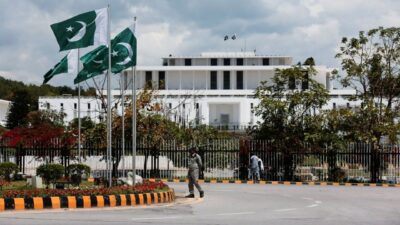
The prevailing diplomatic ambiguity highlights the growing chasms between both parties, with tensions in the Strait of Hormuz and ceasefire breaches further complicating the road to a resolution. While Pakistan aims to act as a mediator, the results of the anticipated discussions remain uncertain.
Also read: All you need to know about Trump tariff refund claims opening Monday in US
Trump, however, conveyed an optimistic view on the possible outcomes, suggesting that Iran could experience a “great and prosperous future” if it complies with US conditions, even alluding to regime change as part of a broader reestablishment of relations. Concurrently, he reaffirmed his long-standing position that Iran must never develop nuclear weapons, dismissing critiques and media portrayals surrounding the conflict.
(Edited by : Ajay Vaishnav)
First Published: Apr 20, 2026 8:15 PM IST