Bhardwaj expressed in an interview with CNBC-TV18 that the draft proposals suggest that delimitation will rely on population statistics, which may favor states with rapid growth rates. “Southern states might be unfairly penalized for managing population growth,” she stated, emphasizing that “women’s reservation is merely a smokescreen for pushing delimitation.”
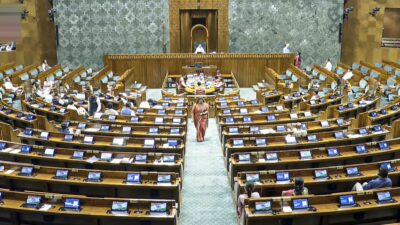
The Centre has called this session primarily to enact the Nari Shakti Vandan Adhiniyam, which was passed in 2023 and guarantees a 33% reservation for women in the Lok Sabha and state legislative assemblies. However, the law associates its implementation with a delimitation process based on an upcoming census, thereby centering attention on the methodology and timing of this delimitation.
Arghya Sengupta from the Vidhi Centre for Legal Policy remarked that the ongoing discussion is essentially centered on delimitation rather than solely on women’s reservation. “This isn’t just an amendment concerning women’s reservation… it fundamentally pertains to delimitation,” he noted, labeling it as a “once-in-a-generation reform” that should not be expedited and must be thoroughly analyzed, preferably by a joint parliamentary committee.
The proposed modifications involve increasing the Lok Sabha’s maximum capacity from 550 to 850, eliminating the constitutional stipulation to defer until after the 2026 census, and granting Parliament the authority to choose between the 2011 census or a future census for determining seat allocation. Critics contend that depending on the 2011 census could disproportionately enhance representation for northern states compared to southern states, thereby affecting the federal equilibrium.
Major General Anil Verma (Retd) of the Association for Democratic Reforms raised concerns regarding the timing and methodology, advocating for the use of the ongoing census instead. “I completely agree that the 2026 census should be utilized… why rush?” he remarked, adding that the manner in which the bills have been introduced raises issues regarding transparency and public consultation.
Also Read | Sonia Gandhi to Mayawati and Akhilesh Yadav, who said what on Women’s Reservation Bill
The Delimitation Bill of 2026 suggests establishing a commission comprised of a retired Supreme Court judge, along with the Chief Election Commissioner and State Election Commissioners, to revise constituency boundaries. This commission would have powers akin to those of a civil court, with limited opportunities for judicial review, leading to further scrutiny from critics.
While government sources have assured that southern states will not face disadvantage and that their seat share will remain intact, experts and activists maintain that the language of the proposed amendments fails to guarantee this outcome, heightening concerns about a potential north-south divide in political representation.