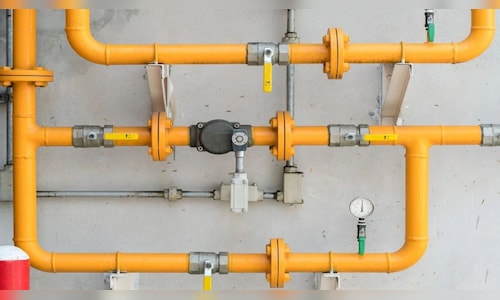
In light of interruptions to energy supplies caused by the West Asia conflict, the government is advocating for a wider adoption of piped natural gas (PNG) as a more convenient alternative to LPG, due to its diverse sourcing and reduced dependence on the Gulf region.
“Prior to the West Asia crisis, we provided around 600-700 PNG connections daily, which has now increased to 2,100-2,200 per day. Our ultimate goal is to reach 5,000 connections,” Chatiwal, IGL Managing Director, mentioned.
In addition to installing pipelines in residential kitchens to offer a practical cooking gas alternative, IGL is focusing on fast-food establishments that have been adversely affected by LPG supply disruptions, as the government prioritized limited cooking gas for households.
Also Read: IGL says household gas prices unlikely to rise much despite supply pressure; awaits tax relief measures
As the largest city gas retailer in the country, IGL has already connected over 100 outlets of two major fast-food chains with PNG, and another similar number is currently in the connection process. IGL is targeting around 400 such outlets in total.
The company is also working on providing PNG connections to every police station in Delhi. Police station cafeterias and canteens, currently utilizing LPG and PNG connections, will benefit from the convenience of avoiding the need for cylinder refills when gas runs out.
Connaught Place (CP), known for its colonnaded Georgian-style architecture and designed as a commercial hub in New Delhi, had not received PNG connections earlier due to permission issues. However, work has commenced following the government’s relaxation of norms to accelerate PNG’s expansion.
The pipeline has now reached the outer circle of CP, as confirmed by officials.
Chatiwal emphasized that India has ample natural gas availability, which is piped into residential kitchens, industries, and commercial establishments like hotels and restaurants.
India produces approximately 92 million standard cubic meters of natural gas per day, with the total consumption of city gas—PNG and CNG combined—being less than one-third of that amount.
In contrast, a significant portion of LPG is imported, primarily from Gulf countries such as Saudi Arabia and Qatar.
“We aim to secure 4.85 lakh new PNG connections in the coming 90 days across our operating geographical areas,” he added.
Also Read: India aims to expand PNG network with blending of Green Hydrogen with natural gas to reduce imports
IGL has developed an extensive city gas distribution infrastructure across Delhi, Noida, Greater Noida, Ghaziabad, Rewari, Gurugram, Karnal, Kaithal, Fatehpur, Ajmer, Pali, Rajsamand, Hamirpur, Shamli, Muzaffarnagar, Banda, and parts of Kanpur and Meerut, spanning over 28,000 kilometers of pipeline network.
The company caters to the fuel needs of more than 2.1 million vehicles operating on CNG through a network of over 950 CNG stations. IGL has connected more than three million households in these cities with PNG.
In Delhi, IGL’s strategy is to target areas where it can achieve 100% PNG penetration and eliminate LPG use. Regions such as New Moti Bagh, East Kidwai Nagar, and West Kidwai Nagar are already free of LPG.
Due to insufficient LPG supplies for both household kitchens and commercial users, the government mandated last month that households transition to PNG in areas where piped natural gas is already available.
As per this mandate, consumers with both PNG and LPG access must relinquish their LPG connection within 90 days, or else cylinder supplies will be halted. Exemptions are applicable only where PNG connectivity is technically unfeasible, subject to a no-objection certificate.
India consumes around 31.3 million tonnes of LPG annually, with domestic production covering about 40% of this requirement, while the remainder is imported. Almost 90% of these imports traverse the Strait of Hormuz, a critical global energy shipping route, which has been blocked due to the West Asia conflict.