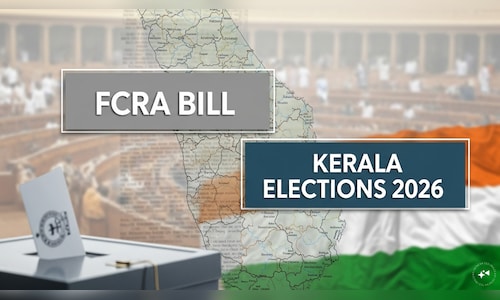
So, why has this sparked controversy in Kerala? Will it influence the upcoming elections? News18 provides an explanation.
WHAT IS THE FOREIGN CONTRIBUTION (REGULATION) AMENDMENT BILL, 2026?
The FCRA amendment aims to fill “legal gaps” concerning asset management when an NGO’s license is inactive. A government-appointed “designated authority” can assume control of and sell foreign-funded assets if the registration is cancelled, surrendered, or not renewed.
Assets generated from foreign contributions will belong to this authority and may be permanently transferred or sold, with proceeds directed to the Consolidated Fund of India. Registration will be automatically considered inactive if a renewal application is not submitted or gets denied.
“Key Functionaries” (directors and trustees) will face personal liability for any violations. Law enforcement is now mandated to obtain central clearance for investigations, while the maximum imprisonment term has been reduced to one year.
WHY HAS FCRA BILL SPARKED A ROW IN KERALA?
The FCRA (Amendment) Bill, 2026 has ignited considerable debate in Kerala because of new measures that empower the Central Government to confiscate the assets of organizations whose foreign funding licenses have been cancelled or are not renewed.
Also Read: Iran-US-Israel War Live Updates
The controversy is particularly pronounced in Kerala, where there is a high concentration of minority-run educational institutions, hospitals, and charitable organizations that depend on foreign funding.
The debate revolves around concerns of executive overreach and the potential targeting of religious minorities, especially with the state gearing up for Assembly elections on April 9.
What the organisations say
Church leaders and opposition parties contend that the FCRA law could be “weaponized” to seize properties owned by Christian and Muslim welfare organizations due to minor administrative oversights.
Institutions like the Kerala Catholic Bishops’ Council (KCBC) have warned that obstructing funds could lead to the closure of crucial schools and hospitals serving impoverished communities, according to reports.
What are political parties saying?
LDF (Ruling): Chief Minister Pinarayi Vijayan has reached out to the Prime Minister, characterizing the Bill as a “direct attack on the autonomy of civil society” and calling for its withdrawal.
Also Read: Supreme Court slaps ₹25,000 cost on Central Government for ‘relentless litigation’
UDF (Opposition): Congress figures like Rahul Gandhi and KC Venugopal have labeled the Bill as “unconstitutional”, arguing it favors groups like the RSS while threatening legitimate charities.
The BJP asserts that the Bill serves national security interests and aims to curb “forced religious conversions”. Leaders such as Rajeev Chandrasekhar have assured that compliant institutions have nothing to fear and described the uproar as “fear-mongering” by the opposition.
As of April 1, the Government has reportedly paused the Bill following widespread protests and disruptions in the Lok Sabha.
WHY IS IT A POLITICAL FLASHPOINT AMID ELECTIONS?
This controversy is notably shaping the electoral discourse. The FCRA issue has reportedly placed the BJP in a defensive position regarding its outreach to the Christian community in Kerala.
Leaders from major denominations, including the Syro-Malabar Church, have voiced “serious concern” over provisions that enable the government to seize control of assets and funds if an institution’s FCRA license is not renewed, according to reports.
The Catholic Bishops’ Conference of India (CBCI) has referred to the legislation as a threat to the “operational survival” of minority and civil society organizations.
Also Read: Trump says US is going to send Iran to ‘stone ages where it belongs’, vows attacks for next 2-3 weeks
Since many schools, hospitals, and orphanages in Kerala are operated by Christian and minority groups, public criticism from church leaders resonates strongly with voters.
Opposition parties have seized this issue to frame the BJP-led Centre as targeting minorities.
The controversy is particularly fierce in constituencies dominated by Christians, such as Pala, Kanjirappally, Poonjar, and Thiruvalla, where the BJP-led NDA has nominated several candidates from the community.
Opposition leaders have questioned the timing of the bill, introduced just days ahead of the election, alleging it was intended to circumvent thorough parliamentary debate while MPs were preoccupied with campaigning.
KEY FAQs
What does FCRA regulate?
Foreign donations to NGOs and their utilization.
Why is Kerala reacting strongly?
Due to the dependency of many NGOs and religious institutions on foreign funding.
Is the bill already a law?
No, it is a proposed amendment still under discussion.
Also Read: 5 doctors arrested after ₹50,000 payment dispute exposes large kidney racket in Kanpur