He suggests that valuations could improve in the future, particularly in quick commerce, but substantial gains will hinge on consolidation and clearer competitive landscapes while overall consumption demand faces uncertainty due to inflationary pressures.
These are revised excerpts from the interview.
Q: With food delivery costs rising and platform fees increasing, what should investors make of this?
A: From an investor standpoint, this strategy makes sense for both players—Eternal (Zomato) and Swiggy. It signifies a transition in a two-player market where growth has stabilized between 18% and 20%, compared to earlier rapid increases. The current focus is on recouping investments and enhancing monetization, shifting from solely restaurant commissions to also include consumer monetization.
Watch the entire conversation here

Q: How will the increases in platform fees affect earnings and valuations?
A: The platform fees for Zomato and Swiggy are fairly comparable, sitting around ₹14.9–15. The variance comes from Swiggy presenting fees inclusive of GST, while Zomato lists GST separately. The recent rise is approximately ₹2.5.
For Zomato, the EBITDA per order in the last quarter stood between ₹20–22. If the full amount is reflected, it could suggest a 10% increase; however, typically only about half of that translates. Therefore, EBITDA could see an improvement of ₹4–5 per order.
On the other hand, Swiggy may experience a more significant impact since its base EBITDA per order is lower, leading to an anticipated increase of 7–9%.
Q: Why doesn’t the full increase translate into EBITDA?
A: Historically, when platform fees rise, the net fees recorded tend to be lower due to rebates, discounts, and added marketing support.
Q: For Zomato, the EBITDA increase is 4–5%, and for Swiggy, 7–9% post adjustment. With EPS rising, what do the PE multiples look like?
A: The stocks have significantly corrected over the past two to three months alongside the broader market. Typically, food delivery trades at around 35x FY28 EBITDA, which is not an earnings multiple as we employ SOTP. This multiple has now adjusted to approximately 30x, which supports the earnings narrative leading into January-March quarter earnings for 2026 (Q4FY26).
Q: While quick commerce appears to be more significant for Zomato than Swiggy, why is the valuation gap so pronounced? What is the current gap, and can it be reduced?
A: There exists a notable valuation difference. Based on SOTP (sum-of-the-parts), we value Zomato’s quick commerce division at $12–14 billion, while Swiggy stands at $4–5 billion. We believe this gap could narrow, but the timeline hinges on competitive intensity. The market needs to streamline from seven players to about three strong contenders, and currently, it’s uncertain which additional players will remain besides Blinkit.
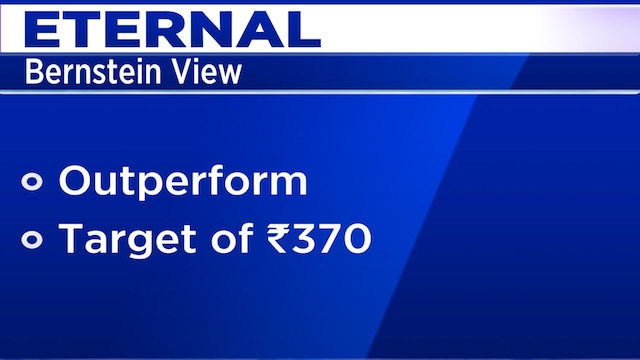
Also Read: Why Bernstein is maintaining Eternal’s ₹370 target despite leadership changes
Q: Has demand been affected?
A: There hasn’t been any significant impact on demand. Demand has shifted due to menu reductions, with larger restaurants and quick service restaurants (QSRs) gaining market share due to their better ability to manage input costs. Food delivery platforms are still fulfilling demand across various restaurants.
Q: What is the broader investment outlook?
A: We are maintaining our ratings on Avenue Supermarts (DMart), Titan, and Trent. However, the broader consumption narrative is uncertain. With potential inflationary pressures, the recovery in demand remains uncertain, even though valuations seem attractive.
Catch the latest updates on the Iran–US–Israel war with CNBCTV18.com’s LIVE blog here.