Artemis I mission shares spectacular view of Earth after a historic launch
4 min read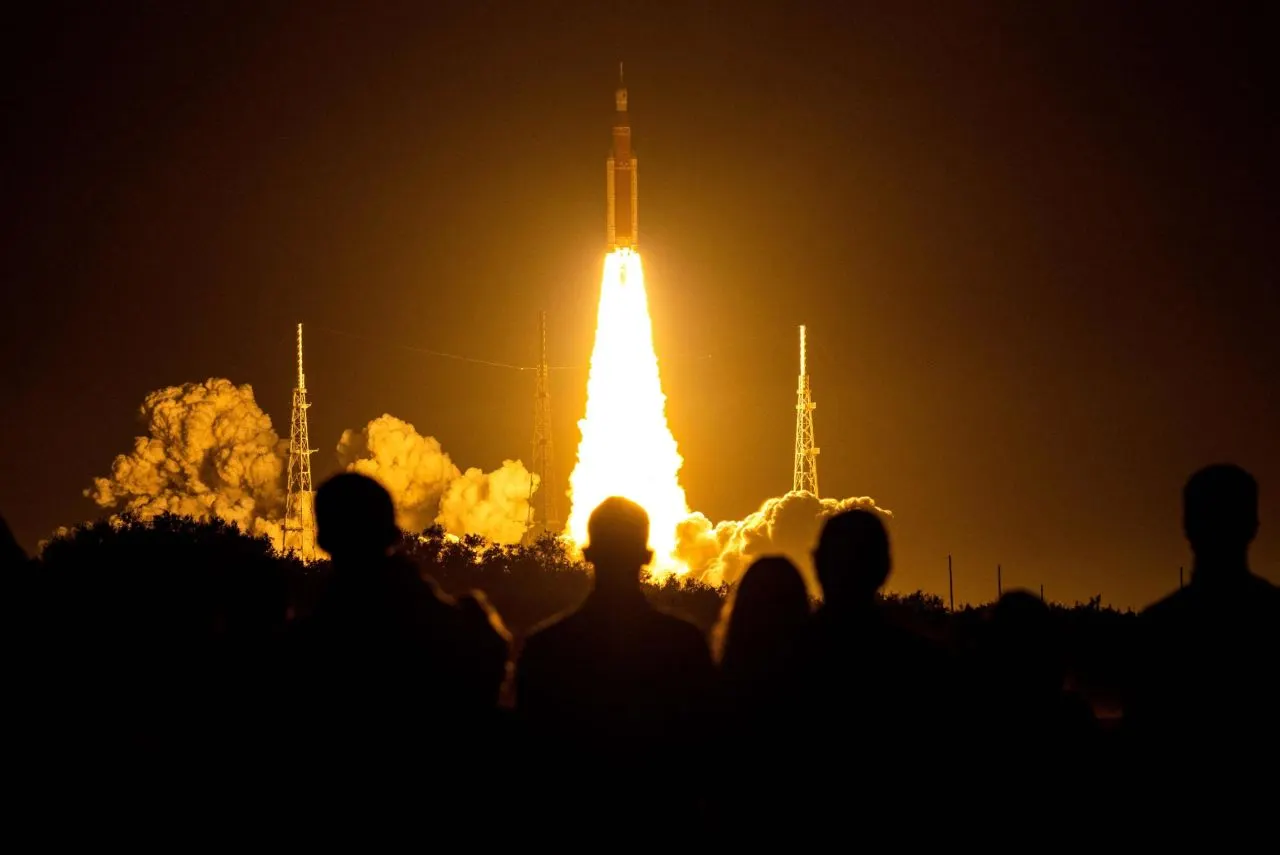
Artemis I’s historic mission began take Wednesday morning after months of anticipation. This remarkable event began a journey that would send unprecedented spacecraft around the moon, paving the way for NASA to return astronauts to the surface of the moon for the first time in half a century. The first spectacular view of Earth was shared from the Orion spacecraft more than nine hours into the journey, the spacecraft is about 57,000 kilometers from our planet on its way to the moon.
It is the first time since the last Apollo mission in 1972 that a spacecraft designed to carry humans to the moon has caught the eye of the world.
The 322-meter-long (98-meter-long) Space Launch System, or SLS, fired its engines at 1:47 a.m. ET. It released up to 9 million pounds (4.1 kilograms) to lift itself from the Florida pad into the air, racing through the night sky.
The Orion spacecraft, a gumdrop-shaped capsule that broke free from the rocket after reaching space, was perched atop the rocket.
Orion is meant to transport humans, but its passengers for this test mission are inanimate, including several mannequins providing important data that can help future live crews.
The SLS rocket burned millions of pounds of fuel until pieces of it separated, leaving Orion to soar through space with only one huge engine.
That engine then ignited two tremendous burns, putting the spacecraft on the proper trajectory toward the moon.
The rocket engine then failed around two hours after liftoff, leaving Orion to fly free for the rest of the mission.
Orion’s outbound trajectory adjustment burn occurred about eight hours after launch, a mission milestone that assures the spacecraft stays on track. The burn prepares Orion for a lunar flyby and closest approach to the moon on November 21, followed by a long-term retrograde orbit around the moon on November 25.
During its near flyby next week, Orion will travel within 60 miles (96 kilometers) of the lunar surface.
The spacecraft is armed with 16 cameras both inside and outside to film its journey around the moon from various perspectives. Commander Moonikin Campos, one of the Artemis mannequins riding in the capsule, was dressed in a survival suit in one of the images posted on Wednesday.
According to NASA, Orion will go around 1.3 million miles (2 million kilometers), traveling a path that will take it further than any other spacecraft designed for human flight. Orion will come back to Earth after orbiting the moon, taking approximately 25.5 days. The capsule will then be dropped into the Pacific Ocean off the coast of San Diego on December 11, where recovery teams will be waiting to carry it to safety.
NASA engineers will monitor the spacecraft’s performance during the journey. The team will assess if Orion operates as expected and will be prepared to support the spacecraft’s first crewed voyage to lunar orbit, which is currently scheduled for 2024.
This mission also marks the first flight of the SLS rocket, the most powerful ever to reach Earth’s orbit, with 15% more thrust than the Saturn V rocket that powered NASA’s landing on the moon in the twentieth century.
And this is just the beginning of a lengthy series of increasingly demanding Artemis flights as NASA works toward its goal of building a permanent colony on the moon. Artemis II will follow in the footsteps of Artemis I, but with astronauts on board. Artemis III, scheduled for later this decade, is projected to be the first mission to land a woman and a person of color on the lunar surface.
Artemis I A tough journey to takeoff
The mission team faced a variety of difficulties in the run-up to the launch on Wednesday morning, including technical issues with the giant moon rocket and two hurricanes that passed through the launch site.
Going to fuel the SLS rocket with superchilled liquid hydrogen appeared to be one of the major challenges that drove NASA to delay earlier attempts, but the tanks were full on Tuesday despite leak issues that interrupted fueling hours before launch.
To resolve this challenge, NASA deployed a “red crew” – a team of specialists specially trained to conduct repairs while the rocket is filled with propellant. They tightened various nuts and bolts to stop the fuel leaks.
“The rocket is alive, it’s creaking, it’s venting – it’s very terrifying.” So… my heart was pounding. My nerves were frayed, but we made it today. When we went up the stairs. “We were ready for action,” red crew member Trent Annis stated after launch in an interview with NASA TV.
Other NASA staffers inside the launch site’s fire room, where agency officials make critical decisions in the hours and seconds before liftoff, celebrated a win.
“Well, for once, I might be speechless,” Artemis admitted. I introduce Charlie Blackwell-Thompson, the first female director.
“I’ve talked a lot about embracing the situation that you’re in,” Blackwell-Thompson stated to the firing room engineers. “And we’ve worked hard as a group.” You’ve worked hard as a group to get here. This is your chance.”
After that, Blackwell-Thompson proclaimed that it was time for tie-cutting, a NASA custom in which launch operators snip the ends of their business ties. Shuttle launch director Mike Leinbach clipped Blackwell- Thompson’s, and she promised the others in the room, “I’ll stay all night if I have to.” It will be my joy to say goodbye.”
Several astronauts were on-site for the launch, and NASA administrator Bill Nelson told reporters that he watched liftoff from a nearby rooftop with a few of the them.
“There were a bunch there that would like to be on that rocket,” Nelson said.